Unmappable: How Arab-American Poets Are Drawing the Emotional Territories That No Algorithm Can Locate
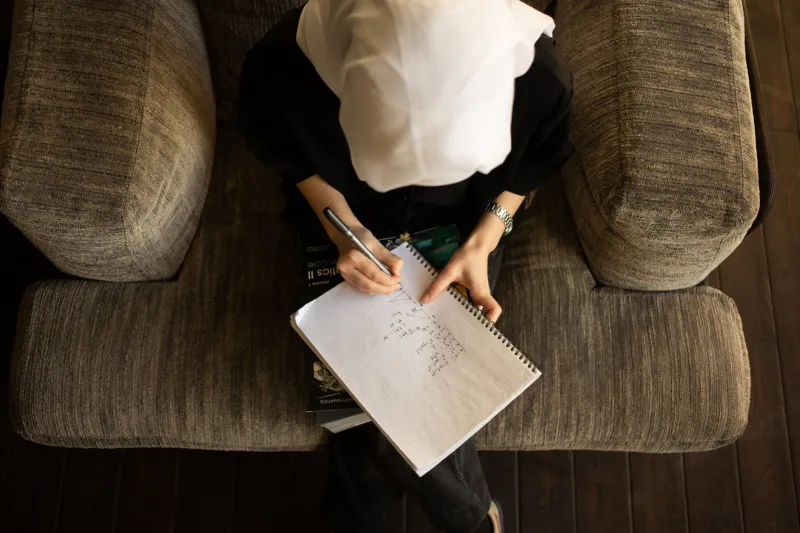
There is a particular kind of disorientation that no navigation app can resolve. It arrives not when you have taken a wrong turn on an unfamiliar highway, but when you stand in the city where you were raised and feel, with quiet certainty, that you do not entirely belong there. Arab-American poets have been writing from inside that disorientation for decades. What has changed recently is the sophistication and confidence with which they are doing it — and the literary world is only beginning to catch up.
The metaphor of the map has long circulated through diaspora literature, but Arab-American poets are doing something more demanding than simply invoking it. They are constructing alternative cartographies: systems of orientation built from memory, language, grief, and desire rather than longitude and latitude. In doing so, they are quietly dismantling one of the most persistent clichés in American immigrant literature — the notion that to live between two cultures is to be perpetually suspended, unresolved, incomplete.
Beyond the 'Between Two Worlds' Narrative
For years, publishers, professors, and literary reviewers have reached for a comfortable shorthand when describing Arab-American poetry: the writer caught between East and West, tradition and modernity, Arabic and English. The framing is not entirely wrong, but it is dangerously reductive. It positions the poet as a figure of lack — someone who possesses neither place fully — rather than as a figure of abundance, someone who has developed an entirely different relationship to space itself.
Poets like Hala Alyan, Fady Joudah, and Marwa Helal have all, in distinct ways, resisted this flattening. Their work does not describe a suspension between two fixed points. It describes something closer to what geographers call a non-Euclidean space — a terrain in which the rules governing distance, direction, and boundary simply do not apply in the expected ways. In Alyan's work, a Beirut apartment and a Brooklyn kitchen can occupy the same emotional coordinate simultaneously. In Joudah's translations and original verse, the Arabic language itself functions as a geography — a territory one inhabits through syntax and rhythm rather than through physical presence.
This is a profoundly different cartographic project than the one American literary institutions typically expect from immigrant writers. It does not ask the reader to locate the poet on a spectrum between two known points. It asks the reader to abandon the spectrum entirely.
The Classical Inheritance of Spatial Verse
What American critics often miss is that this spatial imagination has deep roots in classical Arabic literary tradition. The nasib, the elegiac prelude that opens the traditional qasida, is fundamentally an act of geographic mourning — the poet stands at the abandoned campsite of a departed beloved and reads the landscape for emotional meaning. Place, in classical Arabic poetics, has never been merely backdrop. It is argument. It is evidence. It is the primary language through which interior states are made legible.
Contemporary Arab-American poets are not inventing this relationship to space; they are translating it into a new context. When a poet describes the precise weight of silence in a diaspora household — the way a grandmother's kitchen in Dearborn, Michigan carries the topography of a village in southern Lebanon — they are doing something recognizably classical even as they do something distinctly American. The campsite has changed. The act of standing before it and reading it for meaning has not.
This continuity matters because it reframes what might otherwise appear to be personal or confessional poetry as something with a much longer intellectual lineage. These poets are not simply sharing their feelings about immigration. They are practicing an ancient mode of spatial epistemology — a way of knowing the world through the careful reading of place.
Resistance Written in Coordinates
There is also an explicitly political dimension to this cartographic work that deserves direct acknowledgment. For Arab communities, the act of naming and mapping one's own territory has rarely been a neutral gesture. Palestinian poets, in particular, have long understood that the right to name a place — to insist on its existence in language when it has been erased from official maps — is not a literary flourish. It is a form of survival.
Poets like Naomi Shihab Nye have carried this understanding into American literary spaces for decades, insisting on the specificity of Palestinian place names, family histories, and domestic geographies against the pressure to generalize or abstract. Younger poets working in this tradition are extending that project, applying its logic not only to the occupied territories of the Middle East but to the occupied territories of the American imagination — the stereotypes, silences, and willful misreadings that flatten Arab experience into a series of political talking points.
To write a poem that maps the emotional texture of a specific Arab-American neighborhood, that names its particular light and noise and grief and humor with precision, is to insist on the reality of that place against forces that would prefer it remained vague. The map, in this context, is not a description of the world. It is a claim upon it.
What the Algorithm Cannot Measure
In an era when digital platforms promise to locate and connect us with unprecedented accuracy, there is something quietly radical about a poetic practice that insists on the limits of that precision. The emotional geographies that Arab-American poets are charting — the space between languages, the distance between a self remembered and a self performed, the territory of a name that shifts in pronunciation depending on who is speaking it — these are not data points. They resist quantification by design.
This is not nostalgia or technophobia. It is a sophisticated argument about what kinds of knowledge matter and what kinds of tools are adequate to the task of self-understanding. When a poet chooses the image of a hand-drawn map over a satellite image, they are making a claim about the irreducible subjectivity of human geography — the fact that the most important territories are always, in some sense, drawn from the inside.
For Arab-American communities navigating the particular pressures of life in the contemporary United States — the surveillance, the misrepresentation, the constant demand to explain and justify one's existence — this insistence on interior cartography is more than literary preference. It is a form of self-preservation. The map you draw yourself cannot be confiscated.