The Voice Before the Page: Why Arab-American Poets Are Choosing the Microphone Over the Manuscript
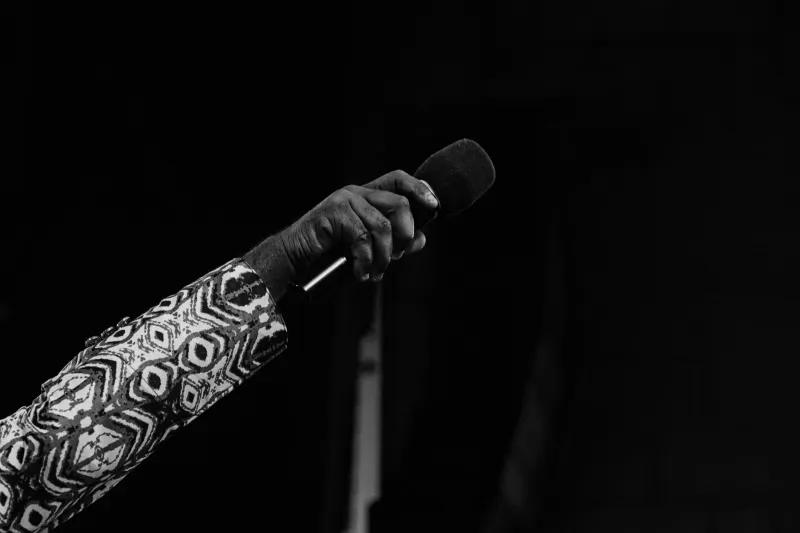
In a second-floor community room in Dearborn, Michigan, on a Thursday evening in late autumn, roughly sixty people have gathered to hear poetry. There are no publishers in the room, no literary agents, no advance reading copies on a table by the door. There is tea, there is the ambient noise of a city that contains one of the largest Arab populations outside the Middle East, and there is a poet standing before the assembled crowd, reciting from memory in a voice calibrated to the specific acoustics of that specific room. This is not a book launch. This is something older and, its practitioners would argue, something more essential.
Across the United States — in community centers in Brooklyn, coffee shops in Los Angeles, university auditoriums in Chicago, and mosque halls in Houston — Arab-American poets are making a deliberate and increasingly principled choice. They are treating the live performance not as a marketing appendage to the published book, but as the primary form their work takes in the world. For some, this means bypassing the traditional publishing apparatus entirely. For others, it means understanding the book as documentation of something that happened first, and most fully, in the air between a poet's mouth and a listener's ear.
A Tradition That Never Needed a Press
To understand why this movement carries such force within Arab-American artistic communities, it is necessary to understand what oral transmission has historically meant in Arabic literary culture. The sha'ir — the poet, the figure from whom this publication takes its name — was not primarily a writer. The word itself derives from a root meaning to perceive, to feel, to be aware. The poet was understood as a vessel for collective feeling, and their work was validated not by critical review or institutional recognition, but by the response of a live audience.
The great pre-Islamic mu'allaqat — those seven celebrated poems said to have been hung on the walls of the Kaaba — were oral compositions before they were ever written down. The transmission of classical Arabic poetry was, for centuries, an overwhelmingly aural practice. Reciters and memorizers (ruwat) were the custodians of literary culture. The voice was the archive.
This is not merely historical background. For Arab-American poets who grew up hearing the Quran recited, who learned poetry from grandparents who never consulted a printed text, who experienced language first as sound and rhythm before they encountered it as symbol on a page, the oral tradition is not a nostalgic artifact. It is a living inheritance. Choosing to foreground performance is, in this context, a form of cultural fidelity — a refusal to allow the specific textures of that inheritance to be flattened into the conventions of the American literary marketplace.
The Publishing Industry's Structural Indifference
There is, of course, another dimension to this turn toward live performance, one that is less about honoring tradition and more about responding to structural exclusion. The American publishing industry has made considerable noise in recent years about diversity and inclusion, but the acquisition patterns, advance structures, and marketing priorities of major houses tell a more complicated story. Arab-American writers — particularly those writing from within rather than about their communities, those whose work does not translate easily into the political narratives that American publishers find commercially legible — have found the traditional publishing path narrow and frequently humiliating.
The submission process, the waiting, the editorial notes requesting that a poem be made more accessible to a general reader who is imagined to know nothing and care little about Arabic literary tradition — these are not neutral inconveniences. They are, cumulatively, a message about whose literary instincts are trusted and whose require correction. Against this backdrop, the decision to build an audience through live performance, to cultivate a community of listeners who do not need the imprimatur of a New York publisher to take a poet seriously, is not a retreat from ambition. It is a redefinition of what success looks like and who gets to determine it.
Building Sustainable Community Through the Spoken Word
What is striking about the live performance movement among Arab-American poets is the degree to which it has generated sustainable artistic ecosystems without institutional support. Regular reading series in cities with significant Arab populations have developed loyal, multigenerational audiences. Poets who might have modest social media followings and no major book deal regularly draw crowds of several hundred people to live events. The financial models vary — some events rely on community donations, others on ticket sales, others on partnerships with Arab cultural organizations — but the common thread is a direct relationship between poet and audience that the publishing industry, by its nature, cannot replicate.
This directness has artistic consequences as well as economic ones. Poets who perform regularly develop a sensitivity to the sonic properties of their work that purely page-based composition can sometimes obscure. The line break that reads elegantly on paper may not survive the pause required by a live audience. The alliteration that seems excessive in manuscript may, when spoken aloud, reveal itself as structurally necessary. Several Arab-American poets have spoken about how live performance has fundamentally changed their compositional process — writing toward the voice first, toward the page second, or not at all.
The Radical Intimacy of the Room
Perhaps the most powerful argument for live performance, and the one that is hardest to quantify, is what happens in the room when a poem is spoken rather than read. There is a quality of attention that live performance demands and receives that is categorically different from the solitary experience of reading. When a poet recites in Arabic and then in English, or weaves between both languages mid-poem, the audience in that Dearborn community room does not experience this as a translation problem. They experience it as the natural texture of their own lives rendered audible.
This is the deepest sense in which the return to oral performance is a radical act. It creates a space — temporary, communal, unrepeatable — in which the Arab-American experience is not explained to an outside observer but shared among people who already, in their bones, understand what is being said. The poem does not need to justify itself. It does not need to provide footnotes. It can simply be what it is: a voice addressing a community that recognizes itself in the sound.