Voice of the Tribe: Arab-American Poets Reclaiming Their Role as the Community's Conscience
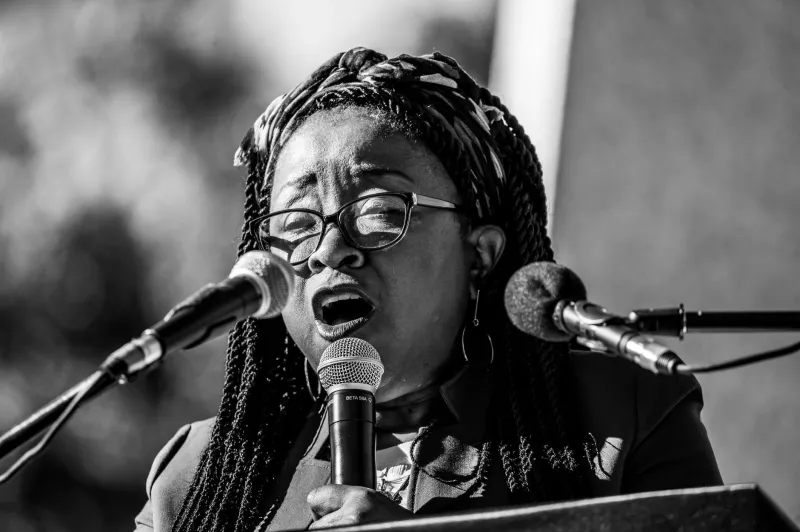
Long before the Western academy coined the term "public intellectual," Arabic literary culture had already defined the role with remarkable precision — the shaer, the poet, who stood at the center of communal life as witness, critic, and moral compass. Today, a generation of Arab-American poets is reaching back across centuries to reclaim that function, refusing the ornamental space the American literary establishment often assigns them and insisting instead on the full weight of what the tradition demands.
The stakes of this reclamation are not merely literary. They are civic, political, and deeply personal.
What the Tradition Actually Required
In classical Arabic culture, the poet was never simply an artist. The shaer — a word whose root carries connotations of perception, awareness, and feeling — occupied a role closer to that of a tribal spokesperson, a keeper of collective memory, and a voice capable of shaming the powerful and honoring the dispossessed in equal measure. Pre-Islamic odes, the celebrated mu'allaqat, were not decorative objects hung in courts for aesthetic admiration. They were instruments of record, accountability, and communal identity.
The great poets of the Abbasid era carried this responsibility further, using verse to engage caliphs directly, to critique policies, and to articulate the grievances of those without formal political standing. Al-Mutanabbi's famous lines were not merely celebrated for their technical virtuosity — they were quoted because they said what courts and councils would not.
This is the inheritance that Arab-American poets are actively reasserting in twenty-first century America, and the assertion is neither nostalgic nor academic. It is urgent.
Speaking Without Permission
The American literary establishment has, for decades, maintained a particular appetite for Arab and Arab-American voices — provided those voices perform a specific kind of cultural translation, explaining trauma, rendering the exotic legible, and doing so within the formal and institutional parameters that mainstream publishing recognizes as legitimate. Poets who have sought to move beyond that prescribed lane have frequently encountered institutional indifference or polite exclusion.
What distinguishes the current moment is a growing refusal to seek that permission in the first place.
Poets such as Hala Alyan — whose work moves fluidly between the lyric and the political, the interior and the communal — have demonstrated that it is possible to command a significant American readership while centering, rather than softening, the complexity of Arab identity. Alyan's poetry does not explain the Palestinian experience to a presumed non-Arab audience. It inhabits that experience on its own terms, demanding that readers meet the work where it lives.
Similarly, Fady Joudah, a Palestinian-American poet and physician, has consistently used his platform to engage questions of justice and witness that extend far beyond the confines of the literary page. His translations of Mahmoud Darwish brought one of the twentieth century's most consequential political poets into English with full fidelity to Darwish's moral seriousness — a project that itself constituted an act of public advocacy, insisting that American readers reckon with a tradition of politically engaged Arabic verse they had largely been shielded from.
The Digital Agora and the Return of Oral Culture
One of the more striking dimensions of this reclamation is the medium through which it is occurring. The shaer of classical tradition operated primarily in oral performance — verse was composed to be heard, to move through a crowd, to be remembered and repeated. The intimacy and immediacy of that mode were central to its social function.
Digital platforms, whatever their considerable limitations, have restored something of that directness. Arab-American poets who might wait years for a collection to find a traditional publisher are instead reading their work aloud to audiences of thousands on Instagram Live, posting poems in response to breaking news within hours of an event, and building communities of readers who engage with their work as ongoing public commentary rather than static literary artifact.
This is not a diminishment of the art. It is, in many respects, a return to the conditions under which the tradition was born — poetry as live discourse, as immediate response, as the community speaking to itself through the voice of the one who perceives most acutely.
Poets like George Abraham and Zeina Hashem Beck have navigated this space with particular sophistication, using social platforms not merely as distribution channels but as extensions of the poem's argument itself — the form and the forum collapsing into a single act of public address.
When the Poem Becomes the Testimony
Perhaps nowhere is the reclamation of the shaer's role more visible than in moments of collective crisis. During periods of heightened political violence affecting Arab communities — whether in the Middle East or in the form of anti-Arab discrimination within the United States — Arab-American poets have consistently been among the first voices to respond publicly, and their responses have carried a weight that distinguishes them from conventional political commentary.
This is because the poem, at its most effective, does not merely report or argue. It bears witness. It transforms individual suffering into communal record in a way that journalism, however necessary, cannot fully replicate. When Naomi Shihab Nye writes about ordinary Palestinian life, she is performing the classical function of the shaer with absolute fidelity — preserving what power would prefer to render invisible, insisting on the full humanity of those the dominant narrative has reduced to abstraction.
That act of preservation is not incidental to the poem. It is the poem's reason for existing.
The Responsibility the Role Carries
Reclaiming the shaer's function as public intellectual is not without its tensions. The tradition demanded courage, but it also demanded craft — the two were understood as inseparable. A poet who spoke truth without beauty was a pamphleteer. A poet who cultivated beauty without truth was a flatterer. The shaer was defined by the refusal of that false choice.
Contemporary Arab-American poets navigating this inheritance are acutely aware of the demand. The political urgency of the present moment does not release the poem from its obligation to be, first and last, a poem — to earn its authority through language rather than simply assert it through subject matter.
This is, perhaps, the most significant way in which the reclamation differs from mere political speech. The shaer speaks with the full resources of the tradition behind them: the musicality, the precision, the layered allusiveness that makes Arabic verse capable of carrying meaning that prose cannot hold. When contemporary Arab-American poets draw on that tradition, they are not simply adopting a political posture. They are activating a literary inheritance that was designed, from its origins, to change the world.
The question the American literary landscape must eventually reckon with is not whether these voices are political. Of course they are. The question is whether it is prepared to recognize that, in the Arabic tradition, that has always been what the greatest poetry was for.