Verses for Hire: The Quiet Renaissance of the Occasional Poem in Arab America
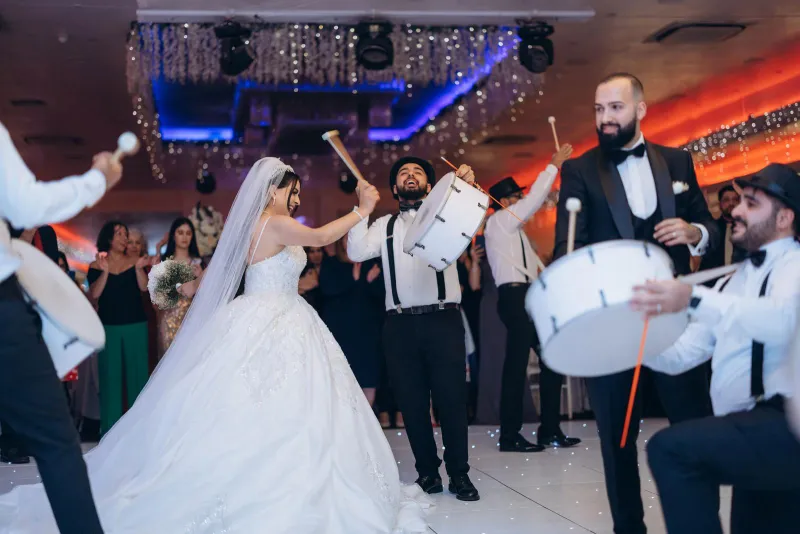
Photo: lively arabic wedding celebration guests dancing warm lights, via findaperformer.net
The band has just finished the zaffa, the procession of drums and ululations that opens every proper Arab-American wedding, and the bride's uncle takes the microphone. But he is not the entertainment tonight. A poet stands, folder in hand, and begins a commissioned ode: the bride's name woven into its lines, her grandmother's village namechecked, a joke about the groom's driving that lands precisely because the poet spent two phone calls learning it. Three hundred guests roar. The poem, they understand without being told, is a gift of status as much as sentiment.
Scenes like this are unfolding with increasing frequency from Dearborn to Bay Ridge to Anaheim. The occasional poem—that ancient genre written for a specific event, patron, or person—is enjoying a genuine renaissance in Arab-American communities, complete with booking calendars, deposit structures, and waitlists for summer wedding season.
The Oldest Freelance Gig in the World
The tradition could hardly be deeper. In pre-Islamic Arabia, the poet was the tribe's public relations department, praise singer, and diplomat. The madih, or ode of praise, celebrated patrons in verses designed to outlive them—a kind of immortality-for-hire that made poetry one of the Arabian Peninsula's most respected professions. A good panegyric could settle disputes, elevate a chieftain, and secure the poet's dinner for a season.
Wedding verse, the wasf and ghazal traditions, carried the same logic into celebration: a milestone unmarked by poetry was, in a real sense, incomplete. When immigrants carried this expectation to Detroit and Brooklyn, it survived in diluted form—uncles who could turn a rhyme, toasts that drifted into meter. What has changed is professionalization. The community now sustains poets who do this work full-time.
The Poet for Hire, 2025 Edition
Today's occasional poets are found the way everything is found: Instagram, WhatsApp groups, referrals from wedding planners. A typical commission runs from a few hundred dollars for a graduation ode to four figures for a full wedding package—rehearsal, performance, a framed manuscript for the couple.
The process is intimate by necessity. Poets describe intake conversations that resemble therapy sessions: family histories, immigration stories, the deceased parent whose memory must be honored, the sibling rivalry that must be handled with one deft line. The best occasional poets are part versifier, part diplomat, part ethnographer of a single family.
Language is a live question at every event. Many commissions are delivered bilingually or in code-switching verse, a line in Arabic answered by a line in English, so that grandparents and college roommates each receive the poem in their own tongue. Some poets write in Arabic and translate live; others compose in English and slip in phrases the elders will catch and the young will ask about—exactly the bridging function the diaspora requires.
More Than a Toast
It would be easy to dismiss the practice as light verse, a party trick with a tip jar. The poets themselves, and the families who hire them, understand something different. Occasional poetry is the last genre most Arab Americans will ever encounter in its original social function: not as text to be analyzed, but as an act performed on behalf of a community, at the moment a community gathers.
There is irony here that the poets savor. While university presses debate poetry's relevance, the form is booked solid every June. While MFA programs debate whether poems can address an audience, the occasional poet faces three hundred of them, live, with a deadline and a deposit already collected.
The tradition also quietly preserves craft. Meter, rhyme, and the discipline of writing to order—so often derided in contemporary poetics—are the daily bread of this scene. Many occasional poets report that commissioned work sharpened, not dulled, their artistic practice: constraints, it turns out, teach.
Milestones in the Margins
The genre is expanding beyond weddings. Graduation odes for first-generation college students have become a signature demand, often commissioned by parents who arrived with nothing and want the moment marked in the language of both their worlds. Birth poems, business openings, retirements, and memorials round out the calendar. One poet in Michigan estimates she has written for more than six hundred families—three generations of some of them.
What these families are purchasing, finally, is not decoration. It is the insistence that a life's turning points deserve the oldest technology of honor their culture possesses. The drums will fade, the cake will be eaten, the photographs will yellow. The poem, written to last, remains—recited at anniversary after anniversary, until someday a grandchild asks where it came from, and the tradition begins again.