What the Record Keepers Left Out: Arab-American Poets as Guardians of Living Memory
There is a particular kind of erasure that does not announce itself. It arrives not through the burning of documents or the banning of books, but through omission—the village that never makes it onto the map, the grandmother whose crossing is reduced to a line in an immigration ledger, the neighborhood that disappears between one census and the next. For Arab-American poets working in the United States today, this quiet disappearance is not an abstraction. It is the condition from which their writing emerges.
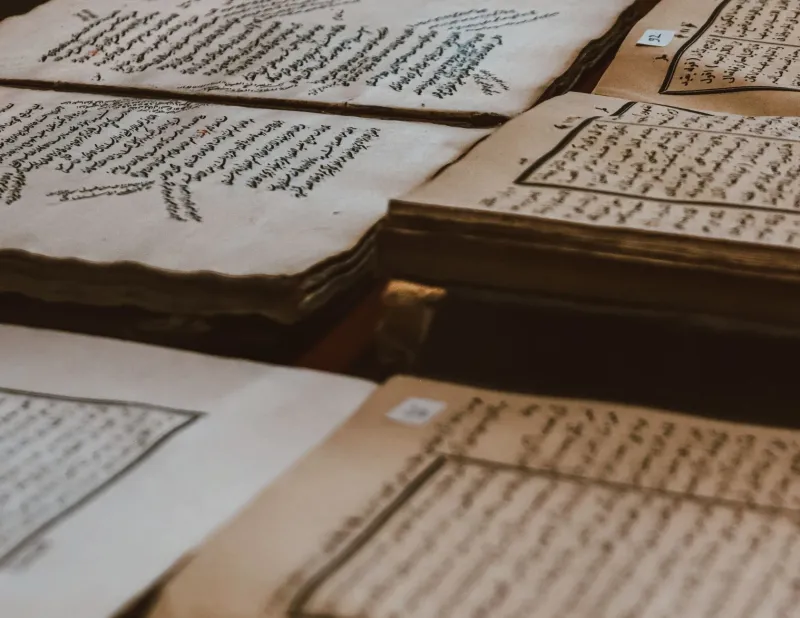
Across the country, a generation of Arab-American writers has assumed a role that extends well beyond the literary. They have become archivists—not in the institutional sense, with acid-free folders and climate-controlled rooms, but in the older, more urgent sense: keepers of what must not be forgotten.
The Limits of the Official Record
American institutional memory has never been especially hospitable to the particulars of Arab life. Wikipedia entries on Arab-majority cities often skip entire decades of social history. University syllabi treat the Arab world as a geopolitical fact rather than a civilization with interior lives. And the oral traditions that carried family knowledge across generations—the stories told in kitchens, at weddings, during the long silences of Ramadan evenings—have no obvious home in the digital infrastructure of collective memory.
This is not incidental. Oral culture, by its nature, resists the archival impulse. It lives in the body, in the voice, in the specific cadence of a particular speaker. When that speaker is gone, the knowledge does not transfer automatically to a database. It must be caught, held, and retransmitted—and poetry, it turns out, is one of the most durable containers human beings have ever devised for exactly this purpose.
Arab poets have known this for more than a millennium. The pre-Islamic qasida was not merely aesthetic performance; it was communal record-keeping, a way of binding a tribe's identity to language durable enough to survive the desert's indifference. Arab-American poets working in the twenty-first century have inherited this understanding, even when they learned it secondhand, even when they arrived at it through loss rather than instruction.
Verses as Testimony
Consider the kind of poem that functions less as lyric expression and more as sworn statement. Poets such as Naomi Shihab Nye have spent decades gathering the textures of Arab-American domestic life—the specific weight of a grandmother's hands, the sound of a particular Arabic phrase that has no English equivalent, the geography of a village that may no longer exist in the form the family remembers. These are not decorative details. They are evidence.
Other writers have taken this archival instinct in more explicitly documentary directions. The poet Hayan Charara, whose family came from Lebanon, has written work that confronts the experience of Arab-American life in Detroit with the precision of a court reporter and the grief of someone who understands what is at stake in getting the details right. His poems do not romanticize displacement. They name it, date it, and place it on the record.
Similarly, the work emerging from younger Arab-American poets—many of them children or grandchildren of refugees from Palestine, Iraq, Syria, and Yemen—carries an almost forensic quality. These writers understand, often instinctively, that they may be the last generation with direct access to certain memories. The urgency in their lines is not rhetorical. It is archival.
The Counter-Archive and Its Stakes
To call this body of work a counter-archive is to acknowledge what it is working against. Mainstream American literary culture tends to absorb Arab-American writing under the category of "immigrant narrative" or "diaspora literature," frameworks that emphasize journey and assimilation while frequently flattening the specificity of what was left behind. The archive that Arab-American poets are building resists this flattening.
It insists on the particular: not "a Palestinian village" but this village, with this olive grove, and these families who held the deeds before the deeds ceased to matter. Not "the Arab-American experience" but the experience of a specific household in Dearborn, Michigan, or Brooklyn, New York, or Anaheim, California, where Arabic was spoken in one register to the elders and in another to the children, and where the television played both Al Jazeera and the local news, and where the kitchen smelled of cardamom and the mailbox bore a name that teachers never pronounced correctly.
This granularity is not sentimentality. It is the substance of history. And when institutions decline to preserve it, poets do.
Oral Tradition and the Digital Present
One of the more striking developments in this archival project is the way Arab-American poets have adapted oral tradition to digital platforms. Readings posted to YouTube, poems shared across Instagram, collaborative digital anthologies assembled outside the gatekeeping structures of major publishers—these are not merely promotional tools. They are preservation strategies.
The logic is straightforward: if the oral tradition was always about transmission across time, then any medium that extends the reach of the voice is a legitimate heir to that tradition. A poem read aloud by its author and uploaded to a platform accessible from Beirut, Baghdad, or Boise, Idaho, participates in the same essential project as the recitation that once traveled from encampment to encampment across the Arabian Peninsula.
This does not mean the digital archive is sufficient. It means Arab-American poets are pragmatic enough to use the tools available to them while remaining clear-eyed about their limitations. Platforms disappear. Algorithms change. The poem itself, committed to memory by readers who carry it forward, remains the most resilient archive of all.
The Weight of the Custodial Role
It would be a mistake to romanticize this position. The poets who have taken on this custodial function did not, for the most part, choose it as an aesthetic program. Many arrived at it through grief—the death of a grandparent who was the last fluent speaker of a particular dialect, the destruction of a family home that existed only in photographs, the realization that a story told once at a family gathering will not be told again unless someone writes it down.
This weight is not always comfortable to carry. It can pull against the poet's other desires—for formal experimentation, for privacy, for the freedom to write about something other than origin and loss. Several Arab-American writers have spoken publicly about the tension between their identity as custodians and their identity as artists who want to be read as more than representatives of a community's trauma.
But the archival impulse, once recognized, is difficult to set aside. The poet who has held a dying language in her ear, or transcribed a grandfather's account of a war that history books reduced to a footnote, or reconstructed a family genealogy from the fragments that survived a refugee camp's disorder—that poet understands something about the stakes of forgetting that most literary institutions do not.
An Archive Built in Lines
The poems that Arab-American writers are producing today will not replace the official record. They will supplement it, complicate it, and in some cases indict it. They will preserve what the ledgers missed and the databases overlooked. They will hold the names, the places, the smells, the sounds, and the silences that constitute a people's interior life.
In this sense, the poet as archivist is not a new figure. Arabic literary tradition has always understood that the poem is a form of memory, and that the poet who forgets this obligation has abandoned something essential. What is new is the context: a diaspora scattered across American cities, working in two languages, navigating two sets of cultural expectations, and finding in the poem the one form capacious enough to hold all of it.
The archive is not finished. It is being written now, in apartments and coffee shops and university offices from coast to coast, by writers who understand that what they are doing is not only art. It is testimony. And testimony, unlike a Wikipedia entry, cannot be edited by a stranger who was not there.