Between Two Languages: The Impossible Beauty of Translating Arabic Poetry Into English
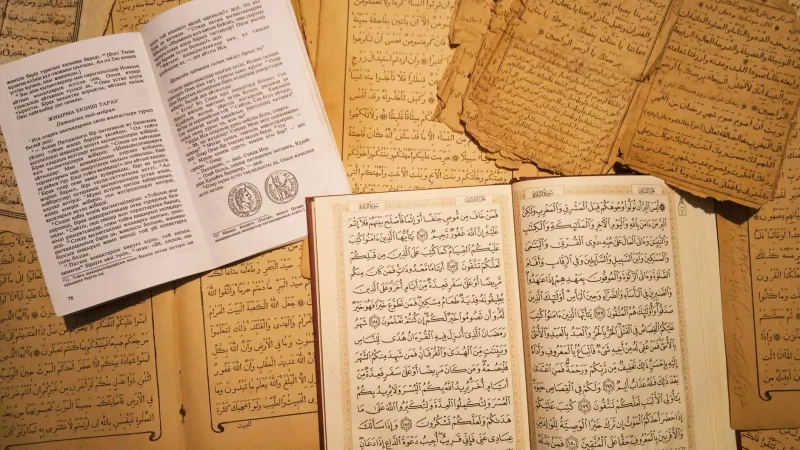
There is a line from the tenth-century poet al-Mutanabbi that, in Arabic, functions simultaneously as a statement of pride, a lament, a philosophical declaration, and a piece of music. The line moves through a classical meter — the tawil, the long form — with a rhythmic inevitability that feels, to a trained ear, as natural as breathing. In Arabic, the line is complete. It contains everything.
In English, it becomes a sentence.
This is the central problem of Arabic poetry translation, and it is a problem that no translator, however gifted, has ever fully solved. The question is not whether something is lost in translation. Something is always lost. The question — the more interesting and more honest question — is what a skilled translator chooses to save, and how.
The Architecture of a Language Built for Poetry
To understand why Arabic poetry resists translation so stubbornly, it is necessary to understand something about the Arabic language itself. Arabic is a root-based language, meaning that most words derive from a three-consonant root from which dozens of related words can be generated through patterns of vowels and additional consonants. The word for "heart," the word for "turning," and the word for "a kind of wine cup" can all share a root. A poet working in Arabic can activate all of those meanings simultaneously through a single carefully chosen word, creating a resonance that no English equivalent can replicate.
Beyond this semantic depth, classical Arabic poetry operates within a system of formal meters — sixteen of them, codified by the eighth-century scholar al-Khalil ibn Ahmad al-Farahidi — that impose a musical architecture on every line. These meters are not merely decorative. They are structural, emotional, and culturally loaded. Certain meters are associated with elegy; others with heroic verse; others with love poetry. A classical Arabic reader hears the meter and is already oriented emotionally before the first word lands.
English has its own metrical traditions, of course. But they are different systems, built on different principles, and they carry different cultural freight. The translator who attempts to reproduce an Arabic meter in English often produces something that sounds forced, antiquated, or simply strange to American ears. And the translator who abandons meter entirely sacrifices what may be the most essential quality of the original.
The Metaphor Problem
Beyond meter and root-word resonance, there is the matter of metaphor. Arabic poetic tradition has developed, over fourteen centuries, a vast and highly specific repertoire of images, allusions, and cultural references that carry enormous weight for readers steeped in the tradition and near-zero meaning for readers who are not.
The desert, in classical Arabic poetry, is not merely a landscape. It is a moral and spiritual space, freighted with meanings that accumulate across the entire tradition. The beloved's encampment — the atlal, the ruins of where she once camped — is one of the most enduring images in Arabic poetry, and its emotional power comes entirely from its position within a tradition that English readers simply do not share. A translator who renders atlal as "ruins" or "remains" has technically done the job. She has also, in a meaningful sense, failed.
Contemporary Arabic poets present a different but equally challenging set of translation problems. Mahmoud Darwish, arguably the most widely translated Arabic poet of the twentieth century, wrote in a register that was simultaneously political, personal, mythological, and deeply rooted in the Palestinian cultural experience. His translators — and he had many, of varying quality — faced the challenge of conveying not just words but an entire world of reference, grief, and defiant beauty.
Where Translation Succeeds
The translators who have come closest to honoring Arabic poetry in English share several qualities. First, they are genuinely bilingual in the fullest sense — they do not merely understand Arabic grammatically, but feel it emotionally. Second, they accept that translation is itself a creative act, not a mechanical one. Third, and perhaps most importantly, they make principled decisions about what to prioritize and they are transparent about those decisions.
Khaled Mattawa, the Libyan-American poet and translator whose work has brought a number of contemporary Arabic poets to American audiences, has spoken about the necessity of recreating the feeling of a poem rather than its literal content. His translations of Adonis and Saadi Youssef read as genuine English poems — they breathe in English — while preserving the tonal and emotional signature of the originals. This is not a compromise. It is a philosophy.
Adnan Haydar and Michael Beard, whose collaborative translations of Darwish have been widely praised, take a different approach: scrupulous attention to image and metaphor, combined with a willingness to allow the English to carry the weight of cultural annotation through careful framing. Their translated Darwish is sometimes denser than the original, more explicitly explanatory — but the density is honest. It acknowledges the gap between the two languages rather than pretending it does not exist.
Side by Side: The Difference a Translator Makes
The distance between an adequate translation and an inspired one can be illustrated simply. Consider a well-known couplet from Qabbani's love poetry, which in literal English reads something like: "I wrote your name with letters of fire / and the fire did not burn."
A functional translation preserves this image. A great translator, however, recognizes that the Arabic original is doing something with its sounds — the repetition of certain consonants, the way the meter forces a pause at precisely the right moment — that the literal rendering abandons entirely. The great translator might choose to restructure the English syntax, to find an Anglo-Saxon word that carries a harder sound, to sacrifice the fire metaphor slightly in order to preserve the silence that follows it. The result is a different poem. It is also, paradoxically, a more faithful one.
This is the paradox at the heart of literary translation: fidelity sometimes requires deviation. The translator who follows the Arabic word-for-word often betrays the Arabic poem. The translator who is willing to reimagine the poem in English — to ask what Qabbani would have written had he been writing in English — sometimes comes closer to the truth of the original than any literal version could.
Why This Matters for American Readers
For American readers encountering Arabic poetry for the first time — whether through a diaspora family connection, through academic study, or through the growing cultural presence of Arab American voices in literary spaces — understanding the translation problem is not merely an intellectual exercise. It is an act of respect.
Knowing that the poem you hold in English is already a transformed thing, already a work of interpretation and creative decision-making, opens you to the original in a new way. It creates a desire to hear the Arabic, even if you cannot understand it. It creates a curiosity about what is present in the original that the translation could not carry.
At Al-Shaer, we believe that this curiosity is itself a form of cultural appreciation — perhaps the most honest form available to a reader who does not yet possess the language. The space between the Arabic and the English is not a failure. It is an invitation.
The poem waits on the other side.