Writing Back to the Masters: Arab-American Poets and the Art of Annotating Literary Power
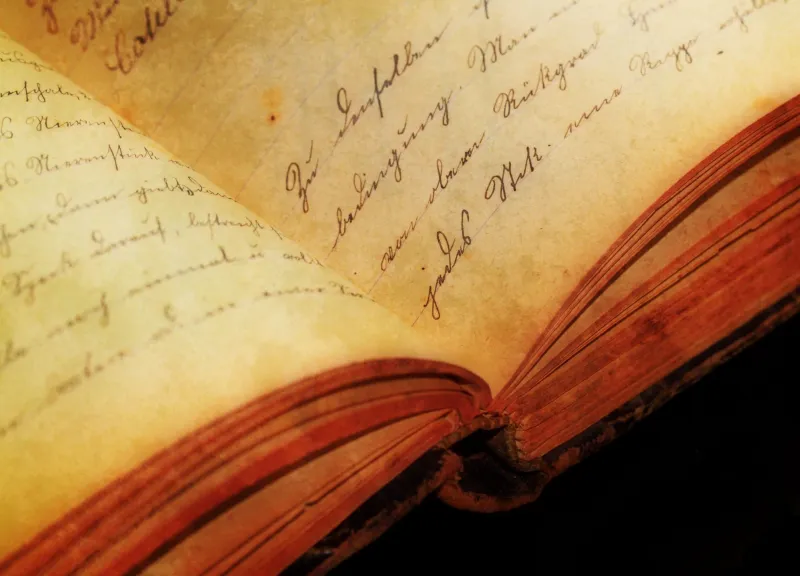
There is a long tradition, in American literary culture, of treating the canon as a finished document — a monument whose edges are clearly defined and whose gatekeepers are well known. For Arab-American poets, this monument has rarely felt welcoming. Yet rather than simply stepping around it, a growing cohort of writers is doing something more deliberate: they are annotating it, disputing it, and in some cases, dismantling it one footnote at a time.
This is the margin notes revolution — not a metaphor, but a practice. And it is reshaping who gets to speak with authority in American literary life.
The Footnote as a Form of Resistance
Annotation has always carried a quiet kind of power. To annotate a text is to claim the right to interpret it, to position oneself as a reader whose observations matter. Scholars have long understood this. What is newer, and what makes the current moment distinctive, is the deliberate use of annotation by Arab-American poets not merely as academic exercise but as creative and political act.
Consider the practice of writing prefaces to translated classical Arabic works — prefaces that correct the record, challenge prior translators' assumptions, or foreground the cultural context that earlier Western editions quietly erased. These introductions are not decorative. They are arguments. They insist that the reader understand who is speaking, from where, and with what stake in the material.
Poets working in this vein describe the experience as one of reclamation. To write a preface to a text that Western academia has long claimed as its own scholarly domain is to say, plainly: we were always the authorities here. The academy simply forgot to ask us.
Scholarly Essays as Creative Extensions
Beyond the preface, a number of Arab-American poets have begun publishing hybrid works that blend poetry with rigorous critical essays — pieces that refuse the separation between the creative and the intellectual. This refusal is itself a statement. In American literary culture, the division between the poet and the scholar is largely assumed. You are one or the other. The Arab literary tradition, by contrast, has long honored the poet-critic, the writer who moves between verse and analysis without apology.
By publishing collections that include both poems and scholarly apparatus — citations, bibliographies, extended notes on prosody and form — these writers are importing a different set of assumptions about what literary authority looks like. They are, in effect, teaching American readers how to read them on different terms.
The risk is real. Work that defies easy categorization can be dismissed by publishing houses uncertain of its market, or shelved awkwardly by bookstores that cannot decide whether it belongs in poetry or criticism. But the poets who have committed to this hybrid form argue that the awkwardness is precisely the point. The discomfort that American literary institutions feel when confronted with a poet who also speaks as a scholar is a measure of how thoroughly those institutions have been organized around a set of assumptions that Arab writers were never consulted in making.
Reinterpreting the Canon, Line by Line
Perhaps the most visible expression of this movement is the practice of creative reinterpretation — poems written explicitly in response to canonical Western texts, not as homage but as correction. Where a canonical poem assumes a universal speaker, the Arab-American response names the assumption and refuses it. Where a celebrated work of American literature renders the Middle East as backdrop or metaphor, the response places it at the center, with its full historical and linguistic complexity intact.
This is not a new impulse. Postcolonial writers across many traditions have long written back to the texts that defined them as peripheral. What distinguishes the current Arab-American moment is the precision and the volume of the response. Poets are not simply registering dissatisfaction; they are producing sustained bodies of work that function as alternative archives, alternative canons, alternative authorities.
Some of these responses are formally rigorous, written in the same meters and structures as the texts they address, demonstrating mastery of the Western tradition even as they contest it. Others are deliberately disruptive, breaking form to signal that the original's assumptions about order and beauty are themselves part of what is being questioned.
The Academy and Its Discontents
It would be a mistake to describe this movement as purely oppositional. Many of the poets involved hold advanced degrees, teach at American universities, and publish in well-regarded journals. They are not outside the academy — they are inside it, working to alter its terms from within.
This insider position creates its own tensions. To annotate the canon with sufficient authority to be taken seriously, a writer must often demonstrate fluency in the very critical frameworks they are challenging. The footnote that disputes a canonical reading must itself be meticulously sourced. The preface that corrects a translator's cultural blind spot must be written in the language of scholarly credibility.
Some poets describe this as exhausting — the labor of meeting an institution on its own terms in order to argue that its terms are insufficient. Others find in it a kind of strategic satisfaction. To beat a system at its own game, while simultaneously exposing the rules of that game, is a particular form of intellectual pleasure that has its own long tradition in Arab literary culture.
Margins That Move to the Center
What the margin notes revolution ultimately proposes is a reordering of the literary map. The margins, in this vision, are not peripheral spaces where minority voices are tolerated at the edges of a dominant culture. They are the sites where the most rigorous thinking is happening — where the questions that the center has avoided are being asked with the greatest clarity.
For Arab-American poets, the annotation of the Western canon is not an act of envy or imitation. It is an act of intellectual confidence. It says: we have read your texts more carefully than you have read ours. We understand your tradition and our own. We are not asking for a place at your table; we are building a larger room.
In that larger room, the footnote is not an afterthought. It is the argument. The preface is not a courtesy. It is the reclamation. And the poet who also speaks as a scholar is not an anomaly. She is, as she has always been in the Arabic tradition, exactly what a poet is supposed to be.
For readers in the United States encountering this work for the first time, the invitation is to sit with the discomfort that genuine intellectual challenge produces — and to recognize it not as a problem to be resolved, but as the beginning of a more honest conversation about who has always held literary authority, and who has simply been waiting to be heard.