Strangers to Their Own Inheritance: How Western Universities Dismantled the Qasida and Called It Scholarship
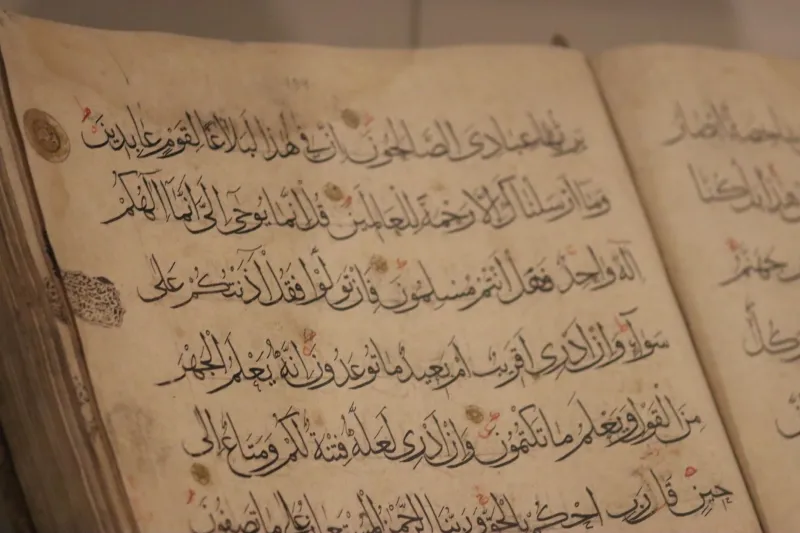
There is a particular kind of estrangement that arrives not through ignorance, but through miseducation. For many Arab-American students who encounter classical Arabic poetry inside American university classrooms, the qasida — that ancient, architecturally complex ode that once moved armies and immortalized empires — arrives already dissected. It arrives labeled, periodized, and subordinated to a set of literary values it was never designed to serve.
The question scholars at the margins of the Western academy are now asking is not simply whether the qasida has been misread. The question is whether the very act of reading it through a Western critical lens constitutes a form of cultural erasure — one conducted with footnotes and syllabi rather than with fire.
A Form With Its Own Laws
To understand what is at stake, one must first appreciate what the qasida actually is — and what it demands of its audience. Emerging from the pre-Islamic Arabian Peninsula and reaching its formal apex during the Abbasid golden age, the qasida is not merely a long poem. It is a ceremonial architecture. Its traditional tripartite structure — the nasib, or elegiac opening; the rahil, or journey passage; and the gharad, the thematic culmination — reflects a worldview in which memory, movement, and purpose are inseparable.
The meter, drawn from the sixteen classical buhur or metrical seas, is not ornament. It is the poem's skeleton. The qafia, the rhyme scheme, is not a stylistic choice but a sonic covenant between the poet and the oral tradition stretching back generations. To strip the qasida of these elements — or worse, to treat them as curiosities rather than as load-bearing structures — is to mistake the shadow of a building for the building itself.
Yet this is precisely what introductory comparative literature courses at many American universities have done for decades.
The Anthology Problem
Dr. Leila Mansour, a scholar of classical Arabic literature at a mid-Atlantic research university who asked that her institution not be named, describes what she calls "the anthology problem" with barely concealed frustration. "The texts that most American undergraduates encounter are not the qasidas themselves," she explains. "They are excerpts — translated excerpts — selected by editors whose primary concern was legibility to a Western readership. The nasib gets cut because it seems sentimental. The rahil gets summarized. What remains is the political or panegyric climax, which then gets read as propaganda rather than as the formal achievement it represents."
The consequences of this editorial compression are significant. When a student reads only the praise-section of a Mutanabbi qasida without the preceding movement of loss and displacement that gives the praise its emotional weight, they are not reading Mutanabbi. They are reading a caricature assembled from his most legible parts.
This process is not always malicious. It is, in many cases, simply the result of applying a set of literary assumptions — assumptions rooted in the European Romantic tradition, in the valorization of lyric brevity, in the preference for interiority over public address — to a form that operates on entirely different premises. The qasida is, among other things, a public art. It was composed to be heard, to resonate across a gathering, to function as political speech and spiritual testament simultaneously. Reducing it to a text object on a page already misrepresents it before a single word of analysis is written.
The Gatekeeping of Interpretation
Beyond the anthology problem lies a deeper issue: the question of who is authorized to interpret the tradition.
For much of the twentieth century, the academic study of Arabic poetry in American universities was dominated by scholars trained in Orientalist methodologies — a tradition that, whatever its individual practitioners' intentions, was structurally oriented toward producing knowledge about Arab cultures for Western consumption rather than knowledge from within those cultures for their own communities.
The legacy of this orientation is visible in the critical vocabulary that still shapes how the qasida is taught. Terms like "formulaic composition" — borrowed from Homeric studies — have been applied to classical Arabic poetry in ways that imply mechanical repetition rather than sophisticated intertextual dialogue. The concept of the "conventional" opening is taught as limitation rather than as mastery of a shared artistic inheritance. The nasib's address to abandoned campsites is framed as cliché rather than as a meditation on collective memory and impermanence that carries centuries of resonance.
Professor Samir Al-Rashidi, who teaches Arabic literary history at a West Coast university and whose recent work focuses on reclaiming indigenous critical frameworks for classical texts, puts it plainly: "We have been taught to apologize for the qasida's conventions. We have been taught to locate its value in the moments where it resembles something Western audiences already recognize. That is not scholarship. That is assimilation."
What Arab-American Students Are Left With
The stakes of this conversation are not merely academic. For Arab-American students — many of whom arrive at university already navigating complex relationships with a heritage that American culture has alternately exoticized and vilified — the classroom encounter with classical Arabic poetry carries particular weight.
When that encounter is mediated through frameworks that treat the tradition as primitive, formulaic, or politically suspect, the damage is compounded. Students are not simply learning a distorted history of a literary form. They are being told, implicitly, that their ancestors' greatest intellectual achievements require Western critical apparatus to become comprehensible — that the tradition cannot speak for itself.
Several Arab-American students interviewed for this article described a sense of alienation from the classical tradition that they trace directly to their university coursework. "I read Al-Khansa in a world literature survey," recalls one graduate student in New York. "One poem, translated, with a paragraph of context. I came away thinking she was a grieving mother and nothing more. It took me years of reading outside the classroom to understand that she was a poet of extraordinary technical sophistication, that her elegies were formal arguments as much as personal expressions. The course didn't give me that."
Reclaiming the Form
The work of reclamation is already underway, though it proceeds largely outside the mainstream of American literary academia. A growing number of Arab and Arab-American scholars are developing critical frameworks rooted in the Arabic rhetorical tradition itself — drawing on classical Arabic literary criticism, on the Naqd tradition, on scholars like Ibn Qutayba and Al-Jurjani, whose theories of poetic excellence were never subordinated to Western aesthetic assumptions.
Poets, too, are participating in this reclamation. Contemporary Arab-American writers are returning to the qasida not as an antiquarian exercise but as a living argument — composing in the form, adapting its structures, and insisting on its relevance to the experience of diaspora, displacement, and cultural survival.
At الشاعر | Al-Shaer, we have long believed that Arabic poetry does not require Western validation to assert its authority. The qasida built civilizations. It encoded grief and triumph and philosophical inquiry with a precision that Western literary traditions are still learning to appreciate. The task before Arab-American scholars and poets is not to make the qasida legible to Western frameworks. It is to build the critical infrastructure — the journals, the courses, the translations made on the tradition's own terms — that allows the form to speak in its own voice.
That voice, when heard clearly and without distortion, needs no apology and no intermediary.