Ancient Roots, American Soil: How Arab-American Poets Are Transforming the Ghazal
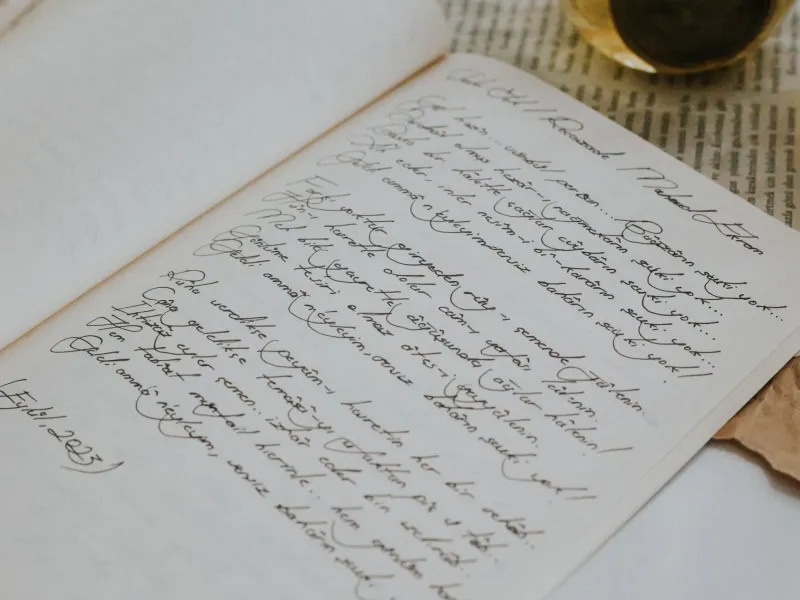
The ghazal, a poetic form with roots stretching back over a thousand years across the Arab world and Persia, is experiencing a quiet renaissance in American literary circles. Arab-American poets are reclaiming this intricate structure, weaving themes of diaspora, memory, and longing into its classical architecture. In doing so, they are demanding that Western literary institutions acknowledge Arabic poetic tradition not as an exotic import, but as a living pillar of American letters.
A Form Built for Longing
To understand why the ghazal resonates so deeply with Arab-American writers today, one must first appreciate what makes the form so structurally distinctive. Composed of autonomous couplets called ash'ar, the ghazal typically circles around themes of love, loss, and spiritual yearning. Each couplet stands alone, capable of bearing its own emotional weight, yet all are bound together by a repeating refrain and a rhyme scheme that gives the poem its characteristic music. The final couplet traditionally includes the poet's own name or pen name — a gesture of self-inscription that has long fascinated literary scholars.
This architecture, scholars note, was not built for resolution. It was built for ache. And for poets navigating the hyphenated experience of Arab-American identity — suspended between a homeland held in memory and a country that does not always extend a full welcome — that architecture feels less like a formal constraint and more like a mother tongue.
Reclaiming the Form from the Margins
For much of the twentieth century, the ghazal entered American literary consciousness primarily through South Asian intermediaries. Poets such as Agha Shahid Ali, whose celebrated collection Call Me Ishmael Tonight introduced many American readers to the strict formal ghazal, helped legitimize the form within prestigious academic and publishing circles. Yet the Arabic origins of the ghazal — its deep entanglement with the classical tradition of poets like Ibn Quzman and the broader diwan heritage — were often left underexplored in those conversations.
A new generation of Arab-American poets is correcting that omission. Writers working out of cities like Detroit, Brooklyn, Dearborn, and Houston are composing ghazals that speak directly to the Arabic literary lineage while simultaneously addressing the textures of contemporary American life. Their work appears in journals such as The Kenyon Review, Poetry Magazine, and independent chapbooks circulated through Arab-American cultural networks.
What distinguishes this current wave is its insistence on bilingual and translingual practice. Many of these poets compose in Arabic and English simultaneously, allowing the two languages to interrogate each other within the ghazal's frame. A couplet may begin in English and conclude in Arabic, or it may hold a single Arabic word at its center like a stone in a ring — unmovable, defining everything around it.
The Diaspora as Poetic Subject
If the classical ghazal was preoccupied with the beloved who remains absent, the contemporary Arab-American ghazal has found new objects of longing: the city one's parents left behind, the language half-remembered from childhood kitchens, the body that does not look like the bodies celebrated in American media, the name mispronounced at every roll call.
These are not small grievances dressed in ornate language. They are, poets argue, the very substance of a tradition that has always used the personal to access the universal. The ghazal's capacity for fragmentation — its refusal to build a single linear argument — makes it uniquely suited to the experience of living across cultural registers. Each couplet can hold a different city, a different decade, a different self.
Poets working in this vein describe the process of writing a ghazal as something close to excavation. The repeating refrain becomes a kind of anchor, a word or phrase that accumulates meaning with each return. In one poet's ghazal, the refrain is the Arabic word wطن (watan), meaning homeland — a word that, by the poem's final couplet, has been stretched to hold grief, irony, tenderness, and defiance all at once.
Challenging the Literary Establishment
The institutional reception of Arab-American ghazals has been uneven, and many poets are candid about the barriers they encounter. Literary prizes and prestigious fellowships have been slow to recognize work that operates across languages or that draws on non-Western formal traditions without first translating those traditions into frameworks legible to predominantly white editorial boards.
Some poets have responded by building their own platforms. Independent presses, zines, and reading series organized within Arab-American communities have created alternative circuits of recognition — spaces where a ghazal does not need to justify its formal choices to an uninitiated audience, where the Arabic refrain does not require a footnote.
At the same time, a number of these poets are deliberately engaging the mainstream, submitting to the most competitive venues precisely because they believe the ghazal belongs there. The argument is not that Arabic poetic tradition deserves a seat at the American literary table as an act of charity. The argument is that it has always been there, shaping the broader human tradition from which all contemporary poetry draws — and that American letters are impoverished when it goes unacknowledged.
The Ghazal as Living Practice
What is perhaps most striking about this moment is the sense of collective energy surrounding the ghazal within Arab-American literary communities. Workshops dedicated to the form are being held in community centers in Dearborn, in university classrooms in New York, and online — reaching poets across the country who might otherwise have no access to this tradition.
Participants describe these workshops not merely as craft exercises but as something closer to cultural recovery. Learning to write a ghazal, for many Arab-American writers, is a way of reaching back through generations of displacement toward a literary inheritance that colonialism, war, and migration conspired to interrupt.
The ghazal, in this sense, is doing what the best poetry always does. It is holding what cannot otherwise be held. It is giving form to what resists easy articulation. And in the hands of Arab-American poets writing today, it is becoming something new without ceasing to be what it has always been — a vessel for the things we carry and cannot set down.