From Corner Cafés to Streaming Queues: How Arabic Poetry Is Building Its Own Economy in America
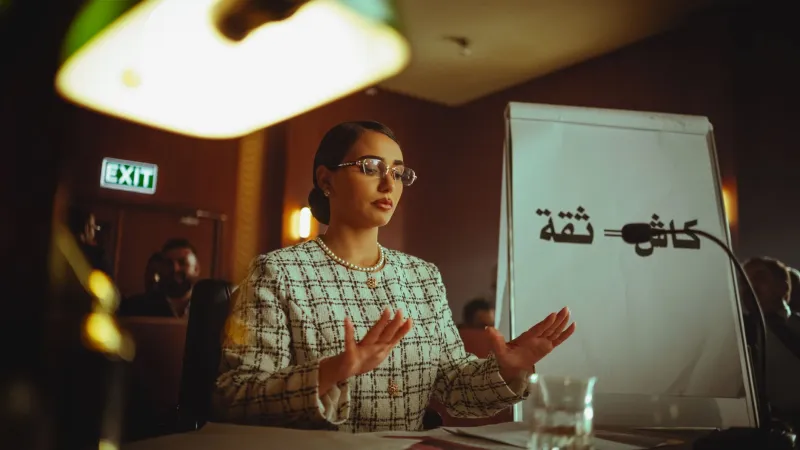
On a Thursday evening in Dearborn, Michigan — home to one of the largest Arab-American communities in the United States — a modest café clears its tables to make room for something that has no equivalent in the mainstream American cultural calendar. Chairs are arranged in loose rows. A microphone is positioned near the window. And one by one, poets take their place before an audience that does not need to be told what a qasida is, or why a particular image drawn from classical Arabic verse carries the weight that it does.
This is not a fringe event. It is one node in a sprawling, largely invisible network through which Arabic poetry circulates in America — generating community, cultural meaning, and, increasingly, income.
The Architecture of an Underground Economy
The phrase underground economy may conjure images of informality or marginalization, and in certain respects, that framing applies. Arabic poetry in America has long existed outside the structures that confer mainstream legitimacy: the major publishing houses, the nationally televised literary festivals, the curricula of most university English departments. But to describe what is happening in Arab-American cultural spaces as merely underground would be to miss its sophistication.
What has emerged over the past decade and a half is something closer to a parallel infrastructure — a set of institutions, platforms, and economic relationships that sustain Arabic poetic practice on its own terms. Poetry collectives in cities including Detroit, Houston, Los Angeles, and Brooklyn organize regular events that draw consistent audiences. Independent producers record and distribute spoken-word content through platforms ranging from YouTube to SoundCloud to Spotify. Poets sell chapbooks, offer workshops, and accept commissions for ceremonial verse — weddings, memorials, community celebrations — that connects the ancient tradition of the professional poet to contemporary American life.
Recitation as Product
The oral dimension of Arabic poetry has always been central to its power. Unlike much of the Western lyric tradition, which evolved primarily as a written art, Arabic verse was composed to be heard — its rhythms calibrated for the voice, its emotional effects dependent on the physical presence of a reciter capable of channeling the full register of the language. This tradition of inshad, of formal recitation, never disappeared. But in the American context, it has found new vehicles.
Recorded recitations, once confined to cassette tapes circulated within immigrant communities, now travel through streaming platforms with global reach. A recitation of a classical ode by a poet based in Houston can accumulate tens of thousands of listens from Arabic-speaking audiences across the United States, Canada, and beyond. Some of these recordings are offered freely, functioning as cultural outreach. Others are monetized through platform advertising revenue, listener subscriptions, or Patreon-style direct support models.
Entrepreneurs within the Arab-American community have identified this appetite and begun building dedicated platforms to serve it. Several apps focused on Arabic spoken-word content have launched in recent years, positioning themselves as alternatives to general platforms that lack the cultural context to curate Arabic poetry meaningfully. These ventures face the familiar challenges of any digital startup — user acquisition, content licensing, sustainable revenue — but they are animated by a conviction that the audience exists and is underserved.
The Collective as Cultural Institution
Perhaps the most consequential unit in this ecosystem is the poetry collective. Across major American cities, Arab-American poets have organized themselves into groups that function simultaneously as artistic communities, booking agencies, educational programs, and advocacy organizations.
These collectives typically begin informally — a group of poets who share a language, a neighborhood, a set of aesthetic commitments — and gradually develop more structured operations as their ambitions expand. They negotiate venue partnerships, apply for arts grants, produce anthologies, and develop curricula for school and community workshops. In several cases, collectives have established themselves as nonprofit organizations, unlocking access to philanthropic funding while preserving their independence from commercial pressures.
The economic model is necessarily hybrid. Grant funding covers certain programming costs. Ticket sales, merchandise, and workshop fees generate supplementary revenue. Individual poets within these collectives may earn income through a combination of performance fees, teaching, translation work, and commissioned writing. None of these income streams is individually sufficient to constitute a full-time living for most practitioners, but together they have allowed a growing number of Arab-American poets to sustain serious literary careers without abandoning their artistic or cultural commitments.
Navigating the Mainstream
The relationship between this parallel ecosystem and mainstream American cultural institutions is complex and evolving. Some poets actively seek crossover recognition — submitting to major literary journals, applying for prestigious fellowships, pursuing relationships with established publishers — while simultaneously maintaining deep roots in community-based networks. Others are skeptical of institutions that have historically shown little interest in Arabic poetic tradition and prefer to direct their energy toward building the alternative infrastructure rather than seeking admission to existing ones.
Both positions reflect legitimate strategic calculations. Mainstream recognition brings resources, audiences, and a form of cultural legitimacy that can open doors. But it also carries the risk of translation in the broadest sense — of having one's work reshaped to fit expectations and frameworks that were not designed with Arabic poetry in mind.
What is clear is that the grassroots economy described here does not require mainstream validation to function. It has its own metrics of success, its own circuits of recognition, its own sense of what constitutes excellence. And as the Arab-American population grows and its cultural institutions mature, that economy is becoming more rather than less robust.
What Sustainability Looks Like
For the poets and entrepreneurs building this ecosystem, sustainability is not merely a financial concept. It encompasses the transmission of a living tradition — ensuring that the next generation of Arab-American writers has access to the formal knowledge, the oral practices, and the community structures that make Arabic poetry what it is.
Workshops for young poets, mentorship programs within collectives, school residencies that bring Arabic verse into classrooms where it would otherwise never appear — these are investments in a future audience as much as they are expressions of cultural stewardship.
The café in Dearborn will clear its tables again next Thursday. The microphone will be repositioned. And the poets will take their place before an audience that knows, without being told, exactly what they are there to receive.